
Table of content
- Define Your Brand
- Craft Your Story
- Online Presence
- Networking
- Consistency is Key
- Deliver Value
What is personal brand?
Your personal brand is how you present yourself to the world. It’s the unique combination of skills, experiences, values, and personality traits that define who you are and how you’re perceived by others. Here are six steps to start building your personal brand:
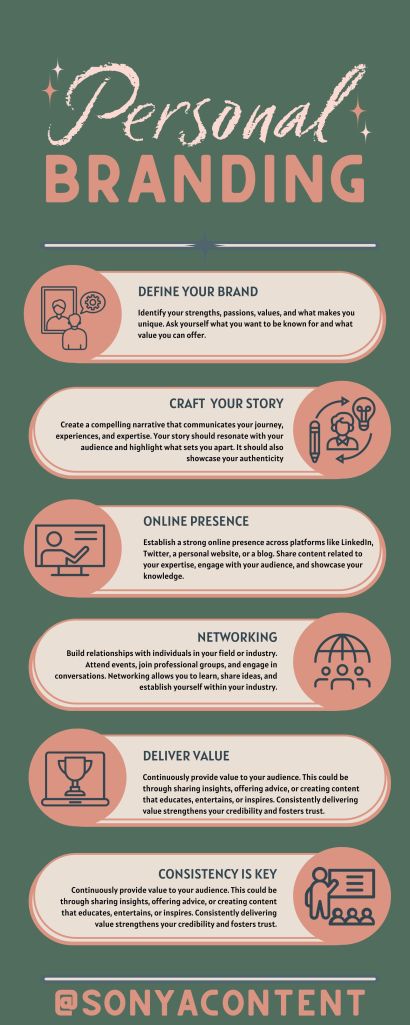
1, Define Your Brand: Begin by understanding yourself. Identify your strengths, passions, values, and what makes you unique. Ask yourself what you want to be known for and what value you can offer.
- Self-assessment: Identify your core strengths, passions, and values.
- Unique Value Proposition (UVP): Determine what makes you stand out in your field.
- Target Audience: Understand who you want to appeal to and what they seek.
2, Craft Your Story: Create a compelling narrative that communicates your journey, experiences, and expertise. Your story should resonate with your audience and highlight what sets you apart. It should also showcase your authenticity.
Here’s a guide to get you started your brand story:
- Know Yourself: Identify your strengths, passions, and values. What drives you? What makes you unique?
- Outline Your Journey: Map out significant experiences, challenges, and successes that have shaped who you are today.
- Find the Core Message: What’s the central theme or lesson from your story? What do you want others to learn or feel?
- Be Authentic: Share your story genuinely. Embrace vulnerability, as authenticity is key to connecting with others.
- Structure Your Story: Start with a compelling hook, develop the narrative, and end with a strong takeaway or call to action.
- Tailor for Your Audience: Consider what aspects of your story resonate most with your target audience.
- Practice and Refine: Share your story verbally and in writing, refining it based on feedback and audience reactions.
- Use Various Platforms: Incorporate your story into your bio, social media, website, and professional profiles.
3, Online Presence: Establish a strong online presence across platforms like LinkedIn, Twitter, a personal website, or a blog. Share content related to your expertise, engage with your audience, and showcase your knowledge.
4, Networking: Build relationships with individuals in your field or industry. Attend events, join professional groups, and engage in conversations. Networking allows you to learn, share ideas, and establish yourself within your industry.
5, Consistency is Key: Ensure consistency in how you present yourself across different channels. From your profile picture to your tone of voice, maintain a consistent image that aligns with your brand.
6, Deliver Value: Continuously provide value to your audience. This could be through sharing insights, offering advice, or creating content that educates, entertains, or inspires. Consistently delivering value strengthens your credibility and fosters trust.
Conclusion
Building a personal brand takes time and effort, but it’s a valuable investment in yourself. It’s about showcasing your expertise and unique qualities to create opportunities, establish credibility, and attract the right connections and opportunities.
Linked Articles:
How to Build Your Unique Personal Brand Story
How do you develop a personal brand and online presence as a new graduate?
Need help?
Get in touch
Follow me @sonyacontent
 Island Memories